
Starlink UK Review: I Didn't Think It Would Work at My House — Four Months Later, I'm Still Using It
A sceptic's four-month Starlink case study from a Norfolk house, after a five-year EE G.Fast line was set to become a ~64 Mbps service. One household's unverified experience of a 2.5% obstructed sky, gaming, downloads and an AI workflow, with missing measurements left visible.

Starlink UK Review: I Didn't Think It Would Work at My House — Four Months Later, I'm Still Using It
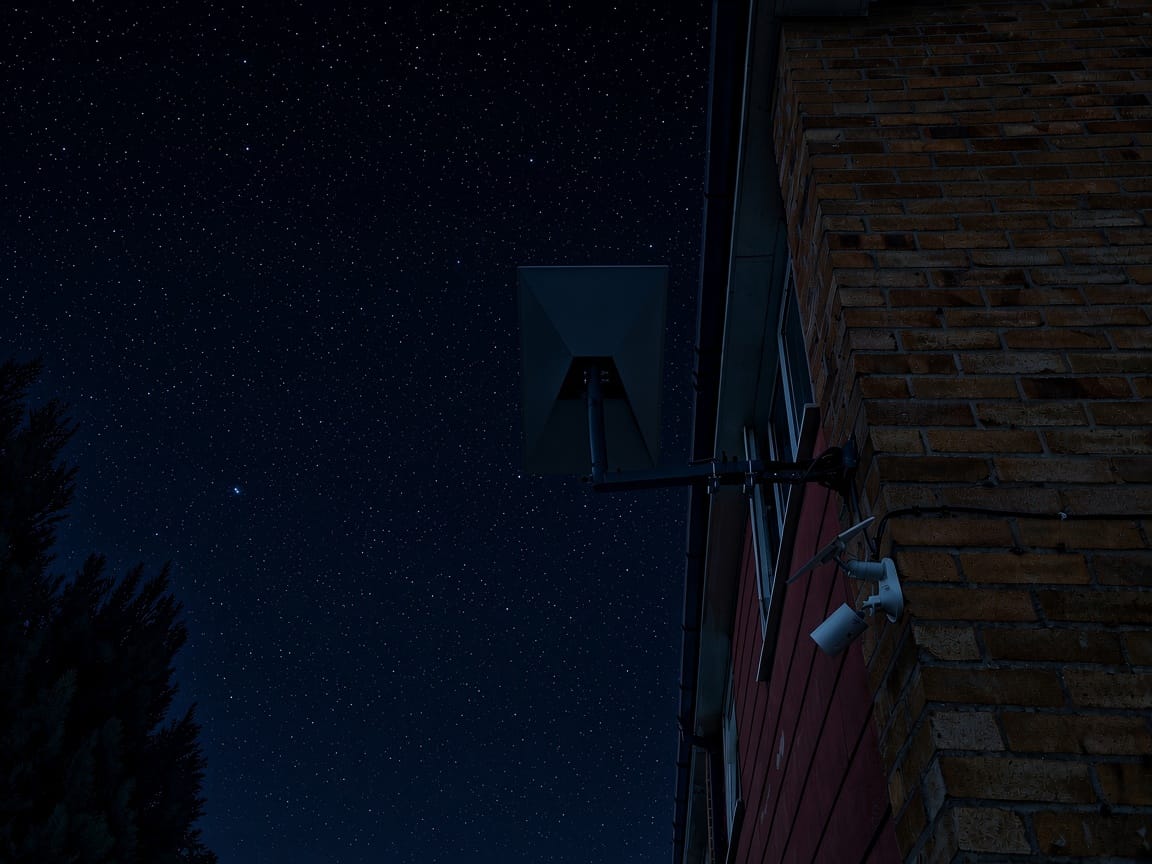
Four months ago I mounted a Starlink dish on the side of my house in Norfolk, aimed it at a sky the app said was roughly 2.5% obstructed, and braced myself for it to be exactly as bad as I expected.
It wasn't. Four months later the dish is still there, the connection is still the one everything in my house runs through, and I have no plans to send it back. I am genuinely surprised to be typing that sentence. The more interesting story here isn't "satellite broadband good" — it's why a man with my specific history of wireless internet disappointment ended up with a satellite dish at all.
Because I have history. In my early twenties I installed rural wireless internet in Lithuania: house antenna, big receiver on a tall building in the nearest town, and ping complaints I could never fully fix. I know exactly how wireless internet fails, because I was the person who had to fix it. When Starlink came up, my internal response was a very tired "here we go again".
Add to that the fact that my install is not a clean one. The dish sits where an old satellite-TV dish used to sit, and because of the position on the side of the house, roughly 2.5% of the sky the app wanted is obstructed. I knew that before I switched it on, and tried it anyway, on the basis that if it didn't work I'd find another location or return it.
Two ground rules. First: I'm not a technology journalist and this isn't a lab test. Everything personal here is one household's recollection — I haven't verified any of it with instrumentation, and where a measurement is missing, the gap stays visible. Second: wherever I state something that isn't mine, I'll link the source and the date I read it. Where I can only tell you what somebody told me, I'll say so.
Here's how it happened.
The Story: How I Ended Up With a Satellite Dish
My EE G.Fast Connection (Around 300 Mbps)
We moved into our current house in 2020. Broadband options in our part of Norfolk were, to put it charitably, limited. After the usual shopping around, the best connection actually available to us was G.Fast, sold by EE: approximately 300 Mbps download and approximately 50 Mbps upload, as I remember it — those are round numbers from memory, not the result of a formal audit.
And for around five years, it was quietly excellent. It streamed television. It handled game downloads of frankly stupid sizes. It carried my working day, my gaming evenings, and every other bit of ordinary household internet life without ever making me think about it. I had no desire to change anything; when you're happy, you stop shopping.
G.Fast was always a slightly odd beast, though — an interim technology with a strange name and a short career ahead of it. I'll come back to what it actually is and why it was doomed, because it turned out to matter to this story a lot.
Why I Thought Full Fibre Was Finally Coming
Full Fibre was being rolled out in our area, but very slowly. It was happening elsewhere in the area first, and it was reasonable to assume our turn would come.
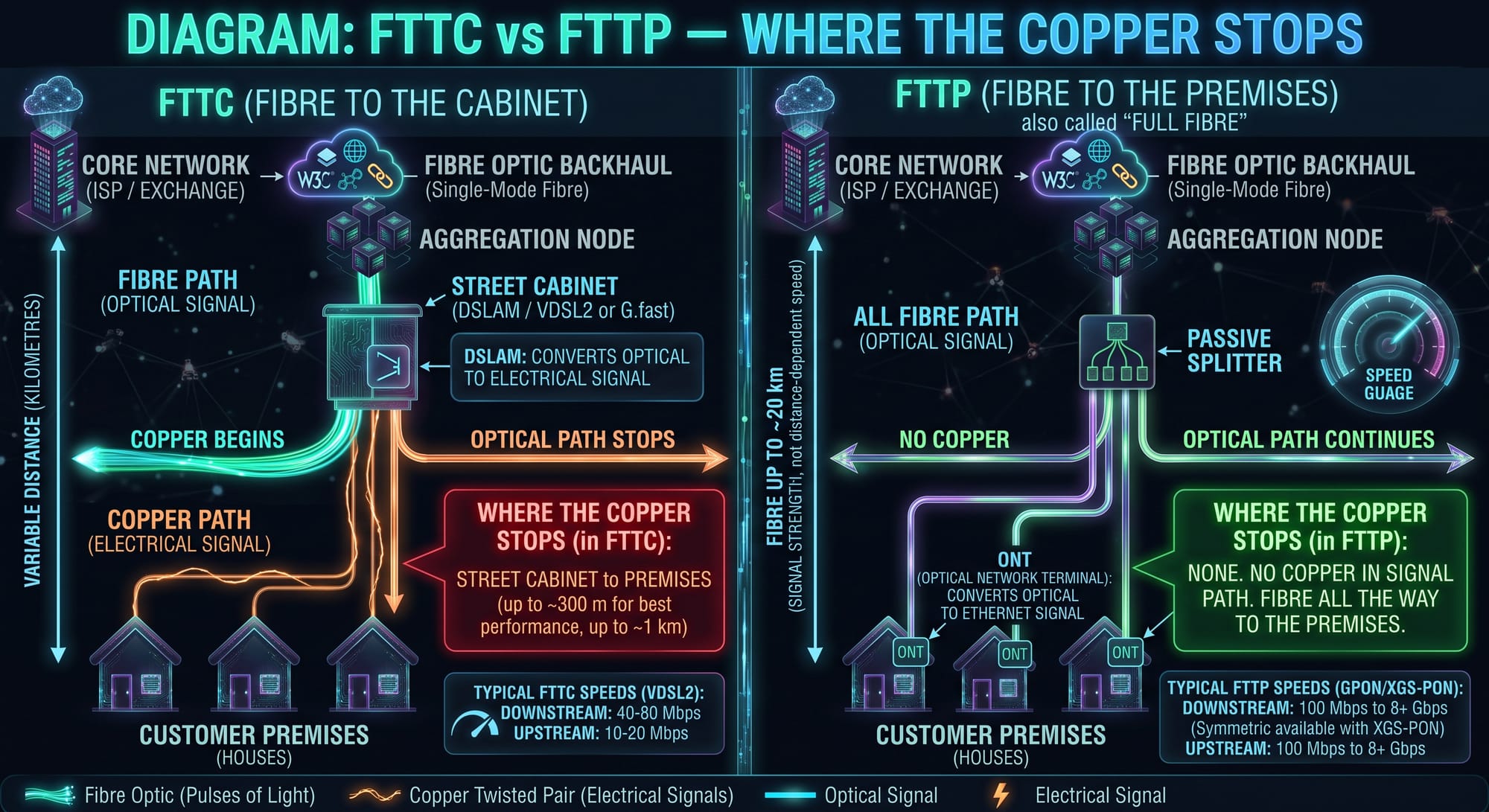
The appeal was obvious. Openreach's own fibre pages (openreach.com, accessed 18 September 2026) put Fibre to the Premises — Full Fibre — at download speeds up to 1,600 Mbps, and describe it as their most reliable and fastest broadband, a pure fibre optic cable running all the way into the home with no copper in the path. Nationally, Openreach says Full Fibre is already available to over 23 million homes and businesses (openreach.com/big-switch-off, accessed 18 September 2026).
So my mental model was simple: our 300 Mbps line was good, but a 1 Gbps-class connection would eventually arrive. I wasn't impatient; I was waiting in a queue I assumed was moving towards me.
The Strange EE Emails
Then, around three months before I switched to Starlink, EE started behaving oddly.
The emails kept arriving, talking about improving my experience, changes to the service, my broadband being upgraded. And then, completely unprompted, a new router turned up at the house.
I read all of this the way I suspect most people would: Full Fibre was finally coming. Why else send new hardware for a service that's staying the same? I was, briefly and genuinely, excited. I remember thinking the 1 Gbps queue had reached us at last.
From a customer's point of view, the communication was confusing and poorly explained. I don't think anyone at EE was trying to pull a fast one; the emails just didn't say plainly what was happening, and I filled the gap with optimism.
The "64 Mbps" Surprise
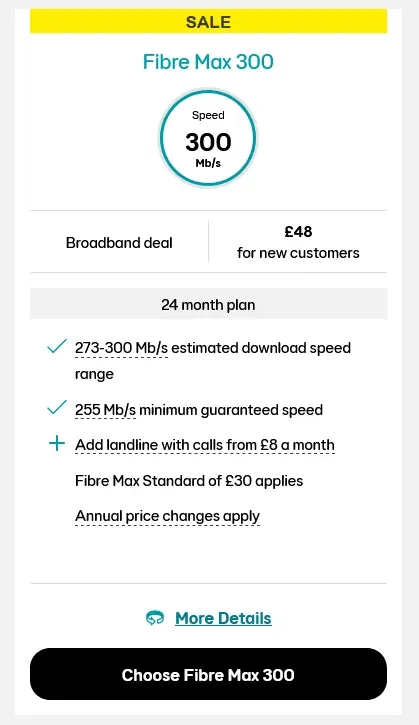
Then came the important email, and the number in it: the "future-proof" service I was being moved towards would be around 64 Mbps.
I had spent five years on roughly 300 Mbps. The upgrade, the one I'd been "improving my experience" about, would be roughly 64 Mbps. That's not an upgrade; that's going backwards — and if I'm precise about the maths, roughly twenty years backwards.
I use "future-proof" above because that's the word as I remember it from EE's emails, describing the service being moved towards. I can't find it on any Openreach page I checked while writing this, so I'm attributing it to my own inbox and nothing else.
Is a number in the sixties technically plausible? Yes. Openreach's published ceiling for FTTC — fibre to the street cabinet, then copper for the last stretch — is 76 Mbps down and 15 Mbps up, available to 96% of the UK, with speeds dropping noticeably beyond about 300–400 metres from the cabinet. And the telecoms site ISPreview has reported that some providers have, in cases where FTTP isn't available, effectively downgraded customers onto slower FTTC lines. I can't tell you which of those things applied to my line — I only know what I was told, and what I was told was around 64 Mbps. Either way, the direction of travel was unmistakable: down.
Calling EE
So I did the thing you do: I picked up the phone.
And here's the part I didn't expect. The call was one of the better customer-service experiences I've had. The representative who dealt with me was genuinely helpful — they took the time to actually explain the situation rather than reading a script at me. What I was told, as I understood it, was that G.Fast was effectively being abandoned and that the situation involved Openreach's infrastructure; that EE couldn't keep providing the same service forever because of changes to the underlying network; and that there were alternatives worth considering.
I don't blame EE for the underlying change. The failure was the communication leading up to it — months of emails that read like an upgrade and culminated in a number that was nothing of the sort. The person on the phone did more in one conversation than three months of emails had done.
What I Learnt About G.Fast and Openreach
I've now spent a small part of my life understanding this, so let me save you the research. This is the general technical and official backstory; my story resumes afterwards.
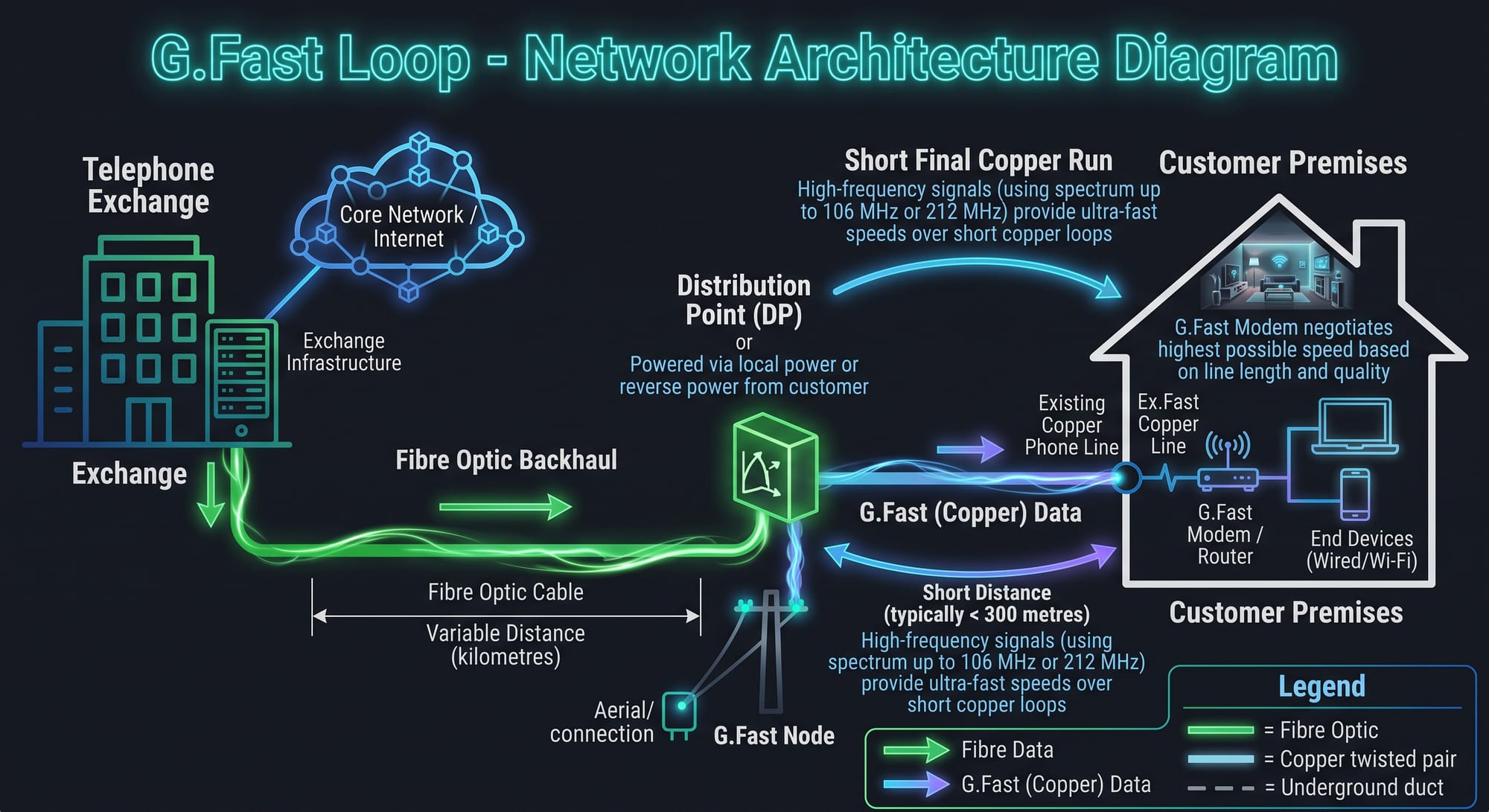
G.Fast is a DSL protocol formalised as ITU-T G.9701, approved in December 2014 — the name stands for "fast access to subscriber terminals", which is the sort of acronym-reverse-engineering only a standards body could love. The idea was to squeeze very high speeds out of the final stretch of copper by shortening that stretch: fibre is run to a small distribution point unit near the premises, and only the last few hundred metres of copper carry the signal. The achievable speed collapses with distance: something like 900–2,000 Mbps on loops under 100 metres, around 600 Mbps aggregate at 200 metres, around 300 Mbps at 300 metres, and about 100 Mbps at 500 metres. It uses time-division duplexing rather than VDSL2's frequency split, and vectoring to cancel crosstalk is mandatory, because when you're ramming that much signal down old copper, your own neighbours' lines are your worst enemy.
On a short, clean line, the maths allowed roughly what I was getting. My ~300/50 was G.Fast doing the job it was designed for.
In the UK, G.Fast was always a bridge product: faster than FTTC's 76 Mbps ceiling, deployed as a stopgap until Full Fibre arrived at scale. It peaked at around 2.8 million UK premises covered, and per ISPreview's reporting, it was ultimately abandoned in favour of building FTTP properly. It never caught on — reporting of BT's end-2018 results put G.Fast take-up at 0.88% against FTTP's 29.9% on comparable coverage. Historical retail tiers ran at 160/30 and 330/50 Mbps, which tells you roughly where a line like mine sat — though I'm not claiming my product was exactly one of those tiers; I only know the speeds I actually had.
The backdrop to all of this is the retirement of the old analogue phone network. Openreach's official position is that the PSTN is being switched off on 31 January 2027, affecting all copper-based services including FTTC, alongside a temporary emergency-voice fallback (EVAc) for anyone who hasn't moved yet. Openreach is also stopping the sale of copper products exchange by exchange as Full Fibre covers them — ISPreview has documented the tranches through 2026, including 238 exchanges in May and another 112 in July.
And the most directly relevant piece of reporting: ISPreview, citing what it describes as credible sources, reported in May 2026 that BT/EE was preparing to migrate its remaining base of over 20,000 G.Fast customers onto the SOGEA platform because of the looming PSTN closure — and that G.Fast as a technology "ultimately ended up being abandoned" in favour of full fibre. BT, when asked, confirmed only the general industry-wide shift away from the PSTN, without specifics.
Notice what that reporting does and doesn't tell me. It corroborates the shape of what I was told on the phone. It does not tell me what happened to my line — and there's a wrinkle: ISPreview's sources say the SOGEA migration shouldn't hurt speeds for those moved, while noting other providers have pushed users without FTTP onto slower FTTC. My ~64 Mbps looks like the second kind of story, but I was never told which product my line was heading to, and I won't guess in print. What I know is what I was told: G.Fast was ending, Openreach infrastructure was involved, and the destination was around 64 Mbps.
Why Mobile Broadband Wasn't Attractive
The obvious alternative, you might think, is mobile broadband. 4G, 5G, a little box on the windowsill, done.
Except. The mobile signal where I live is not particularly good. I know this because I use a mobile phone here, in my house, regularly — this isn't a coverage-map opinion, it's an at-home opinion. And a broadband connection that rides on the same radio waves my phone struggles with, at the same property, did not strike me as a robust plan.
4G and 5G home broadband sounded interesting, and for some people it's clearly the right answer. But I wasn't confident it could reliably replace a fixed line here, and "interesting but probably flaky at my kitchen table" is not what you want from the pipe your working and gaming life runs through.
My Bad Memories of Wireless Internet in Lithuania
To understand why I approached Starlink with the enthusiasm of a man approaching a wasp nest, you need one more piece of my history.
When I was around twenty, I lived in Lithuania and worked for a company called Kompiuterinis langas — roughly "Computer Window". We did computer and internet work, and in rural areas, where villages often had no wired broadband, one of our solutions was effectively wireless internet distribution.
The idea was simple and, I'll admit, clever. If a village had no proper internet, you installed a wireless antenna on the customer's house, pointed it at a much larger receiver on a tall building in the nearest town, and that receiver connected onward to the internet. Village house, to antenna, to big receiver on tall building, to internet. For places with no other option, it was a lifeline.
But my memories are not positive: poor ping. Connection drops. Interference. Trees, mostly, because rural Lithuania has a lot of them and they grow right through your carefully planned line of sight. General instability. I was the person adjusting antennas for people whose connection kept falling over, and there is nothing like being the human error-correcting code for a rural wireless network to cure you of romantic notions about wireless internet.
So when Starlink entered my life, a voice in my head that sounded suspiciously like twenty-year-old me said: "Here we go again — another wireless internet connection." That's not prejudice; that's experience.
Discovering Starlink
Eventually — with the ~64 Mbps future looming and mobile broadband ruled out — I looked seriously at Starlink Residential.
When I was researching it, the advertised figure I saw was up to around 400 Mbps. I want to be careful about that number: it's what the marketing said when I was looking. So treat "up to ~400 Mbps". It was, however, enough to frame the choice that mattered: a service advertised at up to around 400 Mbps versus a certain-feeling slide to around 64 Mbps.
I was still suspicious. I'm not a Starlink fanboy, and I wasn't excited about satellite internet; my working assumption was that I needed something better than 64 Mbps and that this probably wouldn't work at my house. For balance: I'm not a member of the Elon Musk fan club either — the "Mrs Elon Musk" joke followed more or less every mention of the dish, which tells you how out of character this whole adventure was. The technology isn't the man, though, and the man isn't why I bought the dish. The 64 Mbps was why I bought the dish.
Why I Was Extremely Sceptical
Let me catalogue my scepticism properly, because later I'm going to hold it up against reality.
My expectations, in full: an unstable connection. High ping. Dropouts. Weather problems. Trees and obstructions causing constant interruptions. Inconsistent performance that would make working from home a lottery. Lithuania, in short, with a fancier antenna.
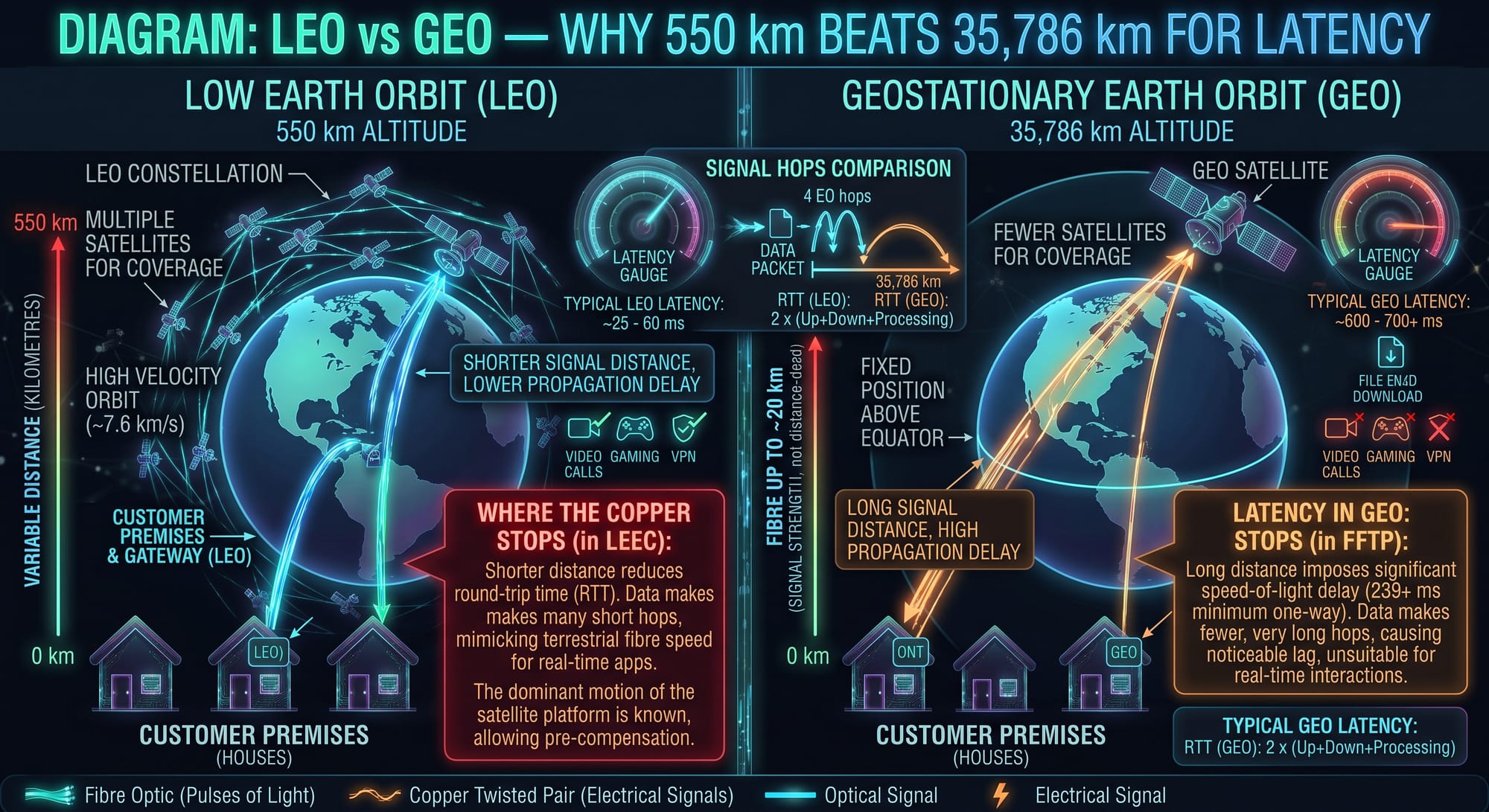
Now the counter-argument I kept reading, and could mostly believe on paper. Starlink isn't the old satellite internet your uncle had, with a dish aimed at a geostationary satellite parked 35,786 km up. Geostationary satellite internet has a minimum theoretical round-trip latency of at least 477 ms, and in practice today's systems run 600 ms or more — that's physics; the speed of light over that distance is simply slow. Starlink instead flies a huge constellation of satellites in low Earth orbit, roughly 540–570 km up for the first-generation shells, and hands your connection between them as they pass. Shorter distance, shorter physics: typical latencies around 25–35 ms, comparable to wired networks, per the secondary sources collated in Wikipedia's Starlink article . The constellation is enormous — over 12 million subscribers and around ten thousand satellites as of June 2026, by that same source's count — and the UK has had the service since January 2021.
I believed the physics. The problem is that physics has never once had to negotiate with the obstructions at the side of my house, and every wireless technology I'd installed or used had lost that negotiation. Hope and doubt sat down together, and doubt was holding most of the chips.
Ordering Starlink
The decision, when it finally came, was almost anticlimactic. The EE emails had done their confusing worst, the phone call had explained the mechanism, mobile was a non-starter, and Full Fibre wasn't coming to my line any time soon. The alternatives were a certain downgrade to around 64 Mbps, or an experiment.
Fine, I thought. I'll try Starlink.
I want to be clear about the frame of mind: I ordered it as an experiment, fully aware it might fail at my house and end up returned, or relocated to somewhere with a better view of the sky. I was not buying a guaranteed service; I was buying a trial with a return option, aimed at the question "is this actually usable here?" My honest prior was no.
Installing It Anyway
Installing the Dish
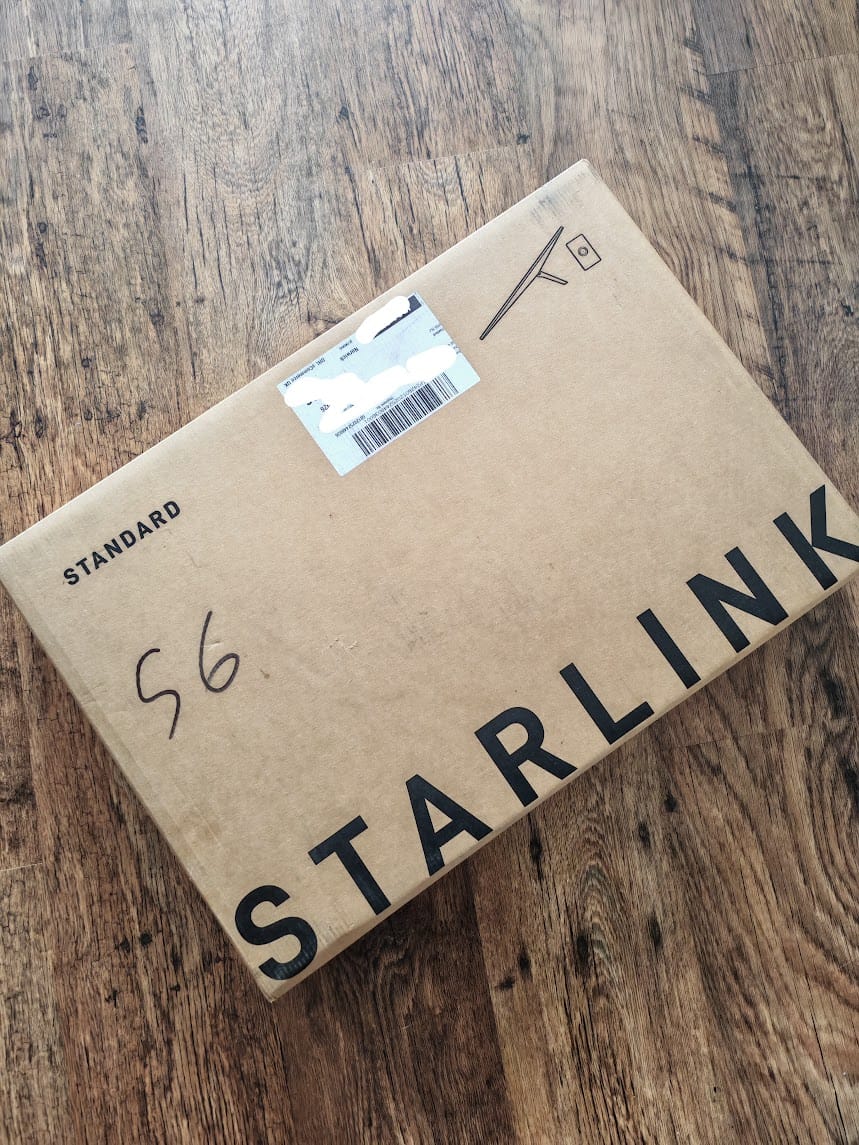
Then the box arrived, and the first surprise happened before I'd plugged anything in: installation was much easier than expected.
The terminal is self-orienting — it works out where it needs to point by itself, without the ceremonial angle-bracket mathematics I remember from my earlier experience with terrestrial wireless antennas. I'd been quietly preparing for an afternoon of bracket-bending and cable archaeology, and instead the process was embarrassingly close to "put it somewhere with some sky, plug it in, follow the app". My instincts said over-engineer; the hardware said calm down.
For hardware context: independent reporting through 2026 describes a new V5 consumer dish (August 2026) and a Wi-Fi 7 "Router 4" hub (September 2026). I won't pretend to know which revision turned up at my door.
Reusing My Existing Satellite-Dish Position
Here's a small decision that shaped everything after it: I didn't redesign anything.
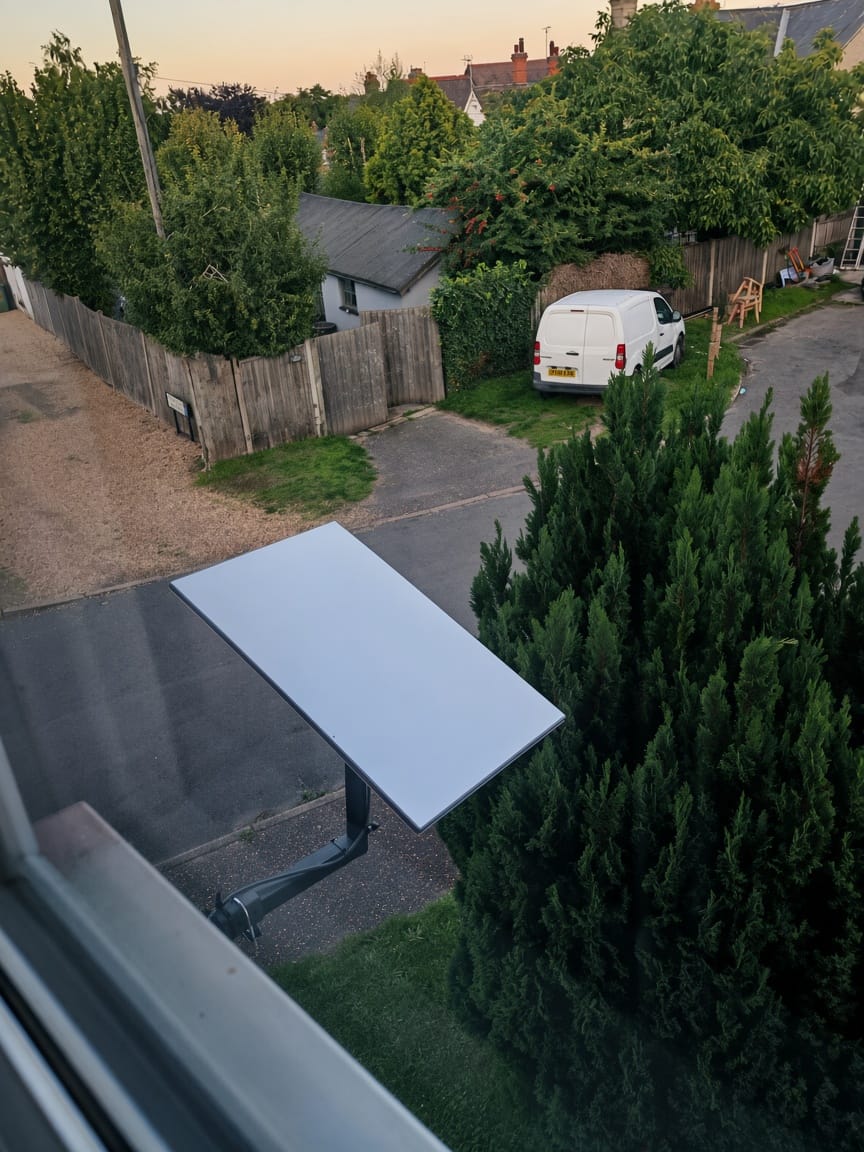
There was already an old satellite-TV dish installation on the house, left over from a previous era. Rather than starting from scratch — new mount, new cable route, the full production — I used the existing position as the basis for the Starlink install. The dish went more or less where the old one had lived.
Was it the perfect location? No. I knew it before I mounted it: the position on the side of the house meant part of the sky was going to be obstructed. A proper job would have started with a site survey and ended with a pole somewhere with a sweeping view of the sky. I skipped all of that — the whole project was an experiment, and you don't commission the scenery before the play has been cast. If it failed, I'd have wasted a survey; if it worked, I could revisit the mounting later. Pragmatic, imperfect, done.
The 2.5% Obstruction
Let me put a number on "imperfect", because the app does.
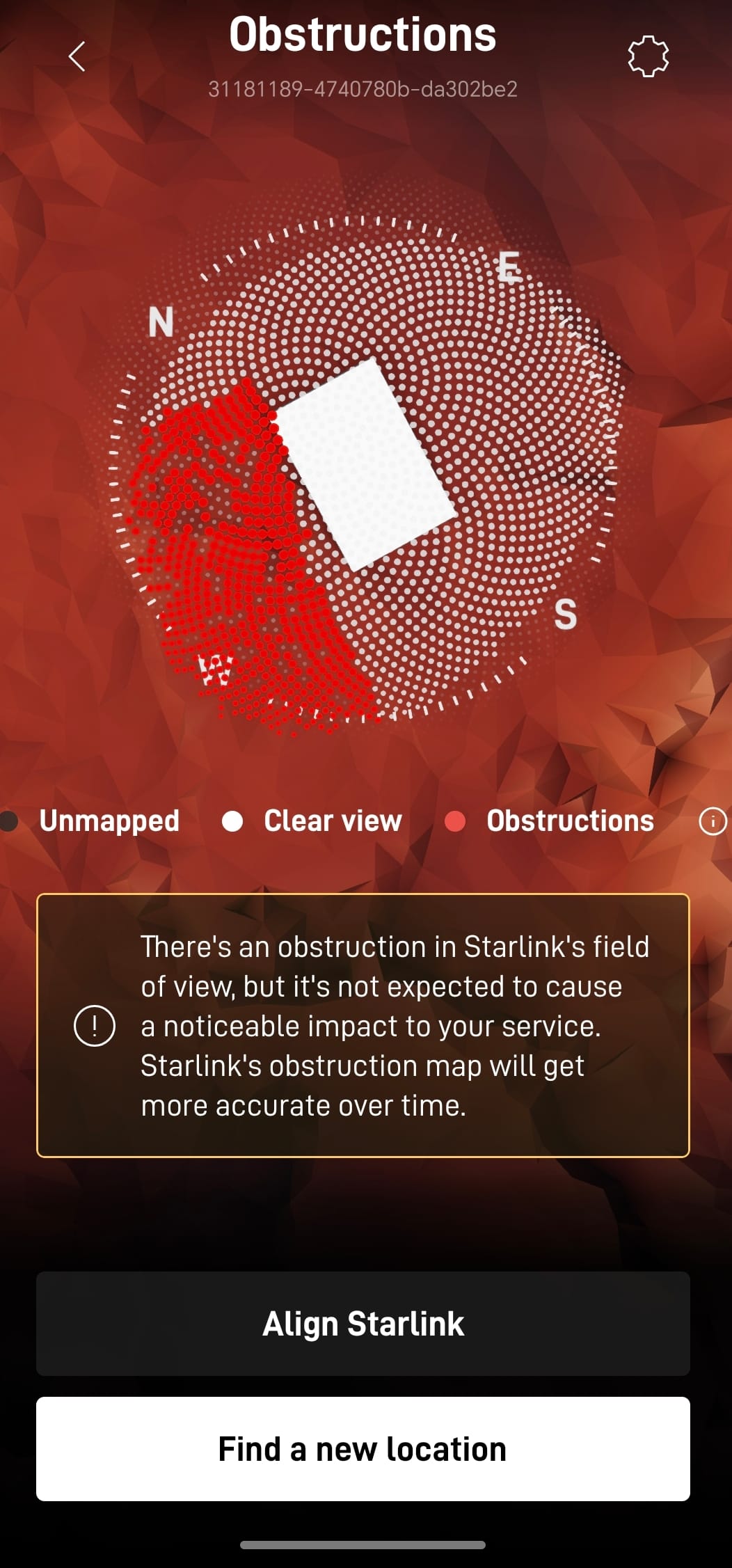
When I checked before installing, the app's obstruction estimate for the dish position came out at roughly 2.5% of the sky the terminal wants to see. That's a thin sliver at the edge of its field of view, as I remember it — not a laboratory measurement, just the app's own assessment for one position.
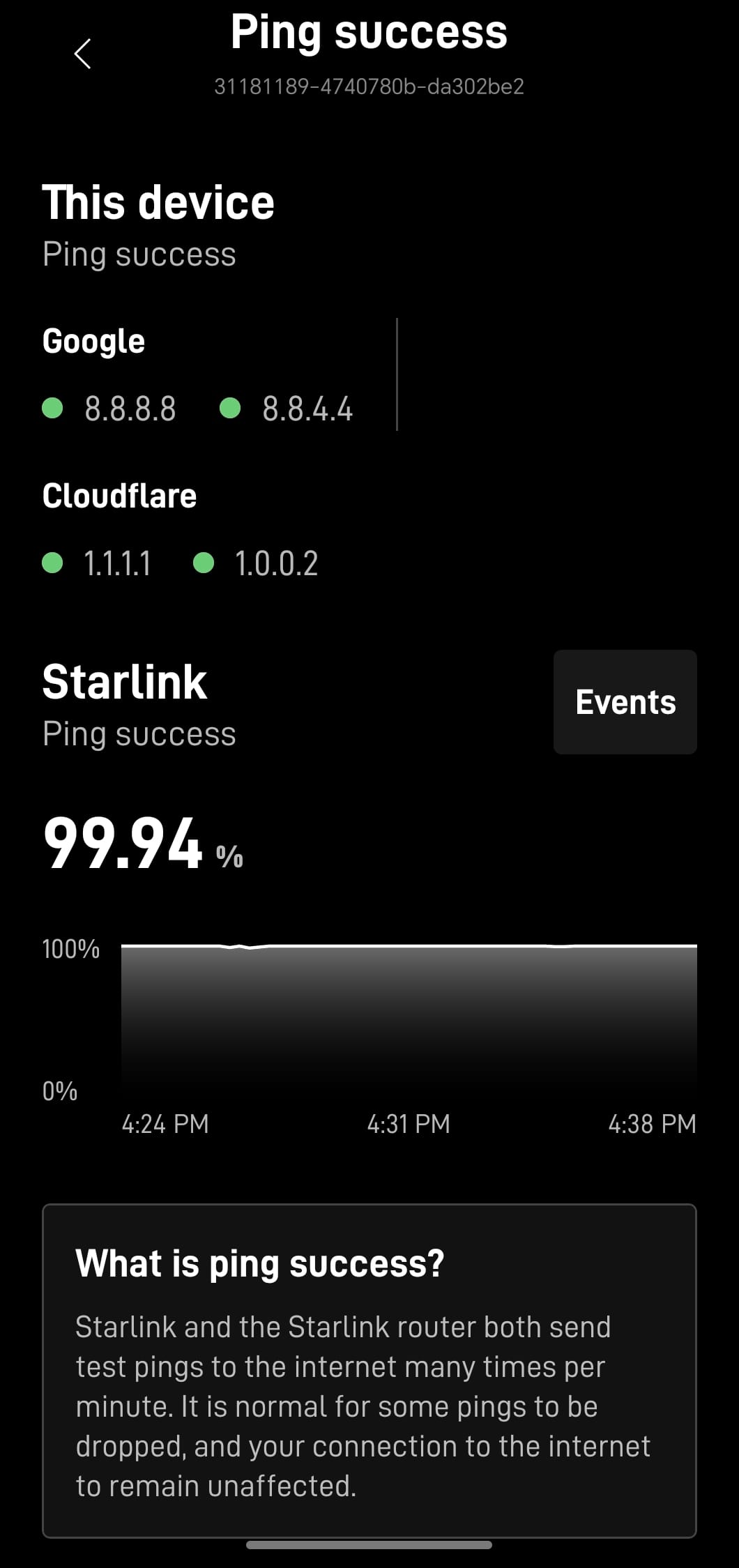
At that size, the obstruction has not affected my connection at all. Not in anything I've been able to detect over four months, and not in anything the terminal's own uptime reporting has shown me. That isn't a loophole or a lucky escape; it's what Starlink says the system is built to do. Starlink's official Obstructions Explained says Starlink is built to deliver reliable high-speed internet "even when a customer's view of the sky isn't perfect", that a terminal has tens of satellites in view, and that it switches between them many times per minute in a way that is "generally imperceptible to the user". The same article states that for well-installed — even partially obstructed — terminals, measured uptime is typically around 99.9%.
The general picture, for anyone who hasn't been through this: the Starlink terminal is a flat phased array that tracks satellites electronically and hands off between them as they move. It needs a clear enough view of the sky, and things in the way — trees, buildings, chimneys, the odd passing roofline — can interrupt the link to a given satellite. But the system is designed to route around exactly that, which is why a figure as small as 2.5% hasn't turned into a degraded experience.
Starlink's guidance still recommends a clear view of the sky, and is explicit that obstructions "may cause service interruptions", with a check advised before ordering for heavily obstructed locations (How to check for obstructions). So 2.5% isn't a licence to ignore siting; it's simply a small amount of obstruction in a system explicitly built to tolerate some. Check your own sky with the app, and take a poor reading seriously.
First Startup and Setup
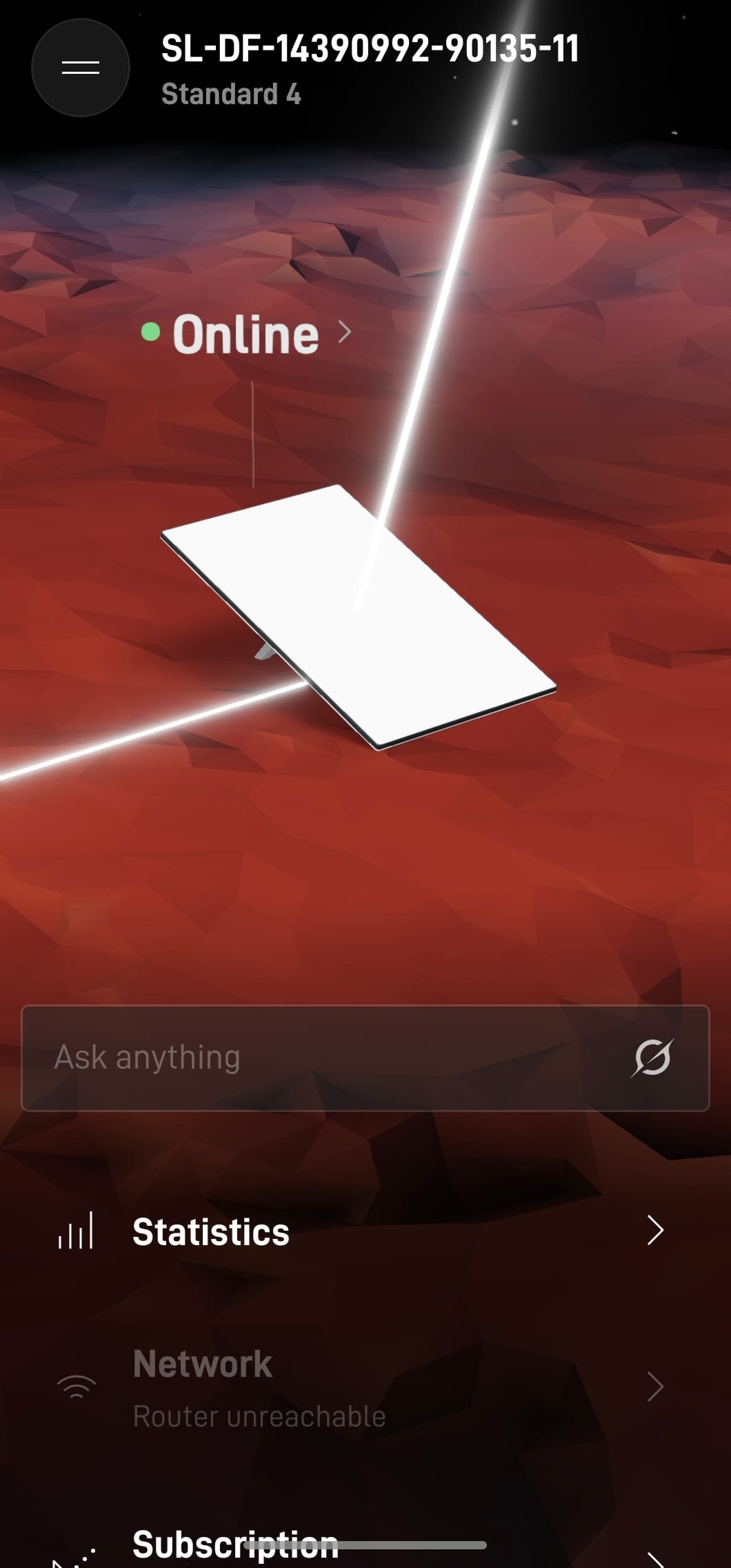
On the first power-on day, what struck me most was how little there was to it.
The dish sorted out its own pointing. The app walked me through the status, showed me what it could see, and then — the part my Lithuania nerves kept waiting for — nothing bad happened. No hour-long alignment ritual, no interference-hunting. The setup was, in the nicest possible way, boring, and I mean that as the highest compliment a man with my background can pay a wireless product.
I'm deliberately not going to invent a step-by-step account of menus and firmware screens. The shape of it: plug in, app, sky, done. The precise screens belong in the screenshots below, not in my memory's reconstruction.
First Impressions
So, first results. The moment of truth for the sceptic.
The honest summary: the connection simply worked, and then it kept working, and the keeping-working part was the genuine shock. My expectation — built from my Lithuania experience — was a connection that worked impressively in calm moments and fell over when it mattered. What I got instead behaved, from the first days, like ordinary infrastructure. It became a thing I stopped noticing, which for a wireless connection is close to a miracle in my personal cosmology.
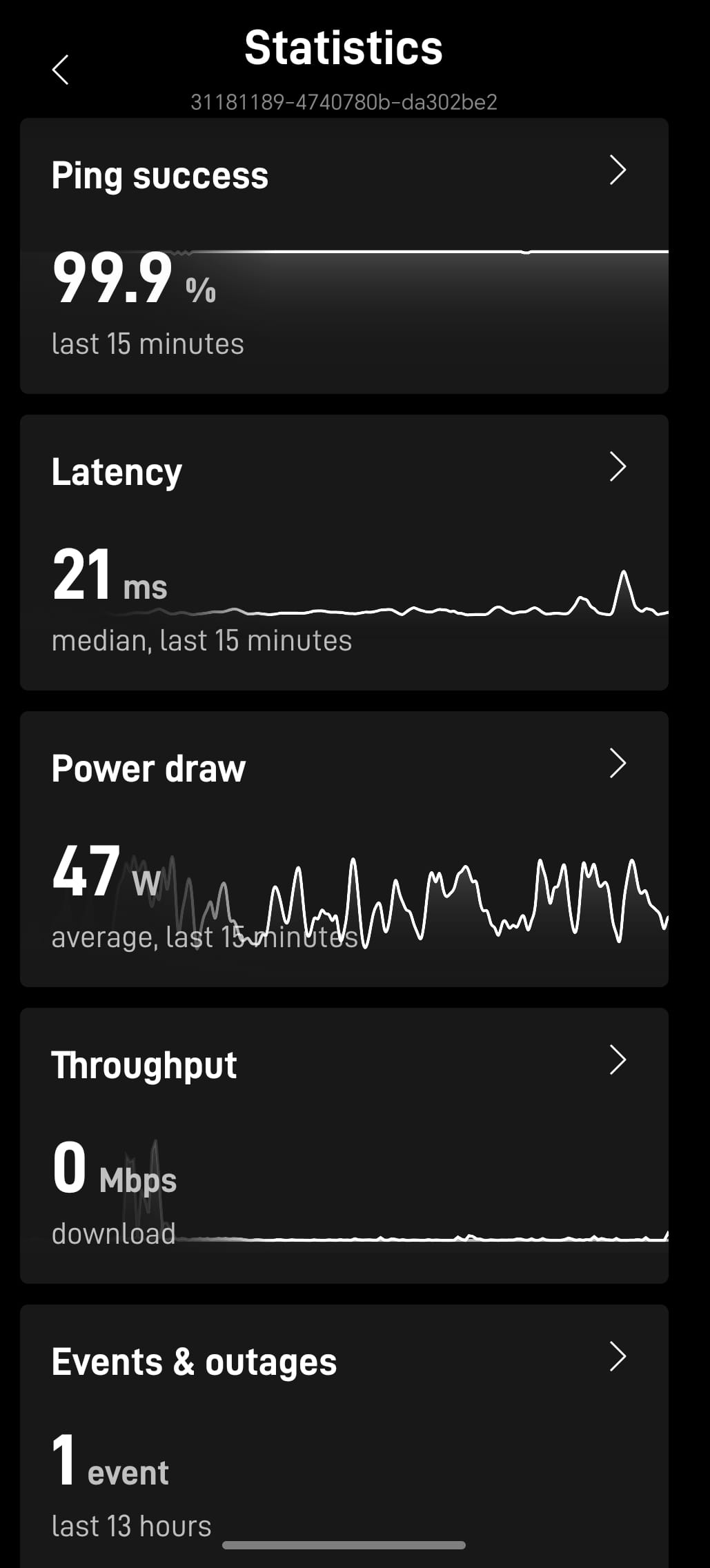
I wish I could hand you numbers here, and I can't yet: my formal speed tests and latency captures aren't in a state I'm willing to publish as data, and I refuse to invent measurements for the sake of a tidier article. The gaps stay visible until they're filled with real ones.
Four Months In: The Case Study
Four Months of Real-World Use
That was the beginning. Now for the part the headline promised.
It has now been around four months, and the honest verdict is that I'm extremely happy with Starlink — much better than I expected. The connection has stopped being an experiment and become the boring default; everything in the house runs through it. Nobody asks "is the internet on the satellite behaving today?" — it's just the internet now, and that transition from novelty to furniture is the most meaningful review metric there is.
The rest of this article takes the four months apart: what I can claim, what I can't, where my numbers end, and the general truths begin. Still one household, still unverified by anyone but me — now organised by topic instead of chronology.
Speed and Latency: What I Can and Can't Claim
Let's do the numbers section, with the unusual honesty policy that there are barely any numbers in it.
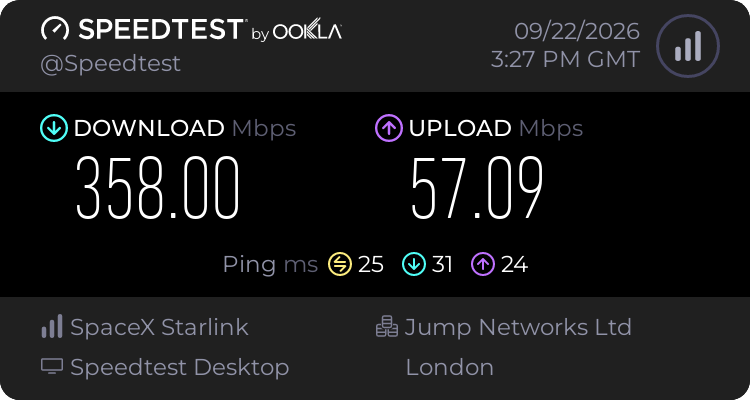
What I can tell you: the service, as I've experienced it, has been entirely fit for everything I do, day to day. What I can't tell you is a set of measured figures, because I haven't taken the structured measurements yet. When I do, they go here:
Reliability: The Qualitative Picture
Reliability is where my scepticism had the most skin in the game.
What I can say: over four months, the connection has been dependable enough to become the default everything runs through, including my working days — the part where an unreliable connection has consequences. What I can't say is a dropout count, a downtime percentage, or a "zero outages" claim: I haven't kept a log, and I won't manufacture one after the fact.
The honest version is: nothing in four months made me want to move the dish, go back to the old line, or eat the ~64 Mbps. That sentence would have read like science fiction to the man who ordered the dish.
Weather
The other chapter my Lithuania memories kept rewriting in advance was weather. In my earlier experience of rural wireless, weather was part of the general instability I associated with it.
First, the physics: satellite links at these frequencies are subject to rain fade — heavy precipitation genuinely does attenuate the signal between you and a satellite hundreds of kilometres up — and Starlink terminals are known to have a snow-melt mode for the dish face, as general technical background. None of Starlink's official weather guidance was retrievable when I checked, so I can't quote the company's own recommendations.
Second, my impressions, clearly labelled as impressions: weather has not been the dealbreaker I braced for. I haven't logged every shower and I have no storm-by-storm statistics. The qualitative summary of four months is that weather simply hasn't given me a story worth telling — no incident I can point at and say "that's when the sky beat the dish". For a man whose reference memory of wireless internet involved trees and instability, that's a genuine result.
Gaming on Starlink: The Qualitative Case
Right — the important part, as far as a significant chunk of my evening life is concerned.
The connection carries my PC gaming: Steam downloads, online multiplayer, the works. Gaming is also where the difference between speed and latency matters most, so let me get the concepts straight — as general explanation, not measurement.
Download speed is how much data you can pull per second; it decides how long a 100 GB game takes to arrive. Latency is how long a single small packet takes to make a round trip; it decides whether your shot in a competitive shooter lands where you clicked. They are different currencies: a fat pipe with terrible ping is a wonderful download machine and a miserable way to play anything twitchy. Which genres care most is well understood — competitive shooters, fighting games, MOBAs and anything reflex-driven live and die by latency and jitter, while turn-based strategy, most co-op PvE, MMOs and sim racing are far more forgiving.
How does Starlink actually fare? I have to hold the line on my own rules: I haven't taken structured ping and jitter measurements over either connection, so I can't print numbers or imply a comparison I can't support. The honest subjective summary: online multiplayer has been part of my normal, happy four months, the connection has given me no reason to go looking for a fixed line, and satellite internet playing modern multiplayer games at all would have been the punchline of every pre-trial conversation I had about it. The numbers, when I capture them properly, will have to stand in below.
And for balance, since I refuse to write a fan piece: a wired connection has a physics advantage in principle, and if competitive latency is the centre of your gaming life, you should want real numbers — mine or anyone's — before concluding a satellite is your friend.
Large Downloads and Steam
Steam is where the raw throughput question gets tested, because modern games have become the size of small operating systems.
What I can tell you: game downloads have been part of the normal, unremarkable life of this connection — big titles arriving without drama is exactly the job I needed it to do. What I can't tell you is a measured figure or a stopwatch time for a specific download, because I haven't captured one.
Everyday Internet Use
Strip away the gaming and the AI plumbing, and what's left is the ordinary internet of an ordinary household.
The everyday mix — streaming, browsing, general family and computer life — has run through Starlink for four months the way it ran through my old G.Fast line, which is the least dramatic and highest compliment available. Nothing about daily use gives me a story, and after a lifetime of wireless internet providing exactly such stories, the absence of anecdote is the anecdote.
I won't quote reliability percentages for streaming or calls, because I haven't measured any. The summary is the same as it's been all along: it became normal, quickly, and normal is what I was buying.
Using Starlink With My AI Coding Workstation
Now the specific, slightly nerdy reason this connection matters to me beyond the household average.
I spend a lot of my computer time at an AI coding workstation. CachyOS Linux, a Ryzen 7 5700X, an RTX 5070 Ti with 16 GB of VRAM, 32 GB of RAM, and a workflow mixing locally-run models with cloud services. I won't re-explain the build here.
What's relevant here is purely the connectivity side, because an AI development machine moves a surprising amount of data around. Large model downloads and software updates are the obvious case — "I'll just pull that down" is a sentence whose practicality depends entirely on your pipe. GitHub operations are the constant background hum: clones, fetches, pushes, pulling repositories and their histories back and forth. None of it is exotic, but all of it is traffic, and all of it now rides on the satellite.
One thing I want to state clearly: I am not going to claim Starlink makes AI coding better. It doesn't work that way, the connection isn't the compiler, and no benchmark changed because the bits arrive from the sky. The only claim on the table is a boring one: the workload I actually run — large downloads, repository traffic, cloud API calls — has run without problems on Starlink for four months. That's the whole claim, and I've become attached to it precisely because it's modest.
OpenCode, OpenRouter and Cloud AI
A little more depth on the AI side, since it's a genuinely different traffic profile from gaming.
My setup, briefly: OpenCode as the coding agent, with a local model served from my own GPU for quick, routine jobs, and cloud models reached through OpenRouter when a task needs a bigger brain. GitHub is wired in through remote MCP servers, so tool calls reach repositories directly. The local-first escalation ladder — start local, escalate to cloud when justified — is the workflow, and it was built to survive exactly this kind of broadband change.
What does that traffic look like from a network's point of view? Two very different shapes. Model and tool downloads are bursts of bulk throughput — gigabytes, occasionally, in one go. Cloud model calls are small requests answered by long, steady streams of tokens: latency sets how snappy the interaction feels, and stability decides whether the stream stutters. The AI workflow wants both of the things this article keeps distinguishing — throughput and latency stability — in alternation.
Can I quantify it over Starlink versus the old line? No: I haven't measured API round trips or token-stream smoothness under either connection, and the work has simply carried on working. If you've read this far, you'll recognise the recurring theme. No API keys, no tokens, no credentials in any of this — the endpoints stay configured on the machine, not in blog posts.
Who This Could Make Sense For
Who should be reading this with growing interest? Let me sketch it, as an opinion informed by my situation rather than advice.
Starlink makes sense to me for people whose fixed-line options are genuinely poor — rural households whose best copper product is a fraction of what they had, or who never had anything worth the name. They make sense amid the copper transition: with the PSTN retiring in January 2027 and copper products being wound down exchange by exchange, many households will be told their service is changing, and some will be offered less. And they make sense where mobile broadband is a non-starter, as it was here. Institutions are doing this maths too: Lincolnshire County Council launched a Starlink pilot for rural farms and not-spots in September 2026 (ISPreview, 11 September 2026), the sort of unglamorous adoption that shows where the gap is.
Who shouldn't? If Full Fibre is available to you, take the Full Fibre — a pure fibre line up to Openreach's published 1,600 Mbps is the better end state, and no satellite anecdote should distract you from that. If your mobile signal is strong and stable, 4G or 5G home broadband deserves a look first. And if your household's life is unusually upload-heavy, check the specifics, because consumer satellite plans are not known for promising symmetric lines. My experience doesn't apply to those situations.
Final Thoughts
The wider lesson I take from this is about a phrase I've used loosely my whole life: "wireless internet" is not one thing.
The rural wireless I installed in Lithuania — house antenna to tall-town-building receiver, trees for enemies — was a real technology with real limits, and my instincts were calibrated to it permanently. Starlink shares a medium (radio, sky, weather) and almost nothing else: a low-orbiting constellation with short physics, tracked by a terminal that aligns itself, is a different proposition in a similar hat. The general theory said the latency could be civilised; I didn't believe theory, because I'd watched practice disagree with it since my first wireless job. Practice, this once, came through.
There's a bigger transition in the background, and my little story sits inside it. The UK is retiring its copper phone network in January 2027; Openreach is stopping the sale of copper products exchange by exchange as Full Fibre covers them; G.Fast — the interim technology that gave me five happy years of ~300 Mbps — peaked at around 2.8 million premises and was abandoned in favour of proper fibre. The industry is mid-migration, and mid-migration is exactly when households get confusing emails and surprising downgrades. Mine is one such household, and I've written this partly because I suspect there are a lot of us.
Where does it go from here? I don't know, and I'd distrust anyone who claims certainty either way. The constellation keeps growing — the first fully operational V3 satellites are reportedly due on a Starship flight (ISPreview, 17 September 2026) — capacity policies visibly change, and the Full Fibre rollout in the area continues slowly. The only prediction I'll sign is that the honest answer to "is Starlink still the right choice?" is a date-stamped one, including this article.
But for now: four months, one imperfect dish, 2.5% obstructed sky, and a connection I stopped worrying about weeks ago. I didn't think it would work at my house. It's working at my house. And the next time I catch myself being certain about a technology I haven't tried, I have a dish on the side of the house to remind me what that certainty used to be worth.